
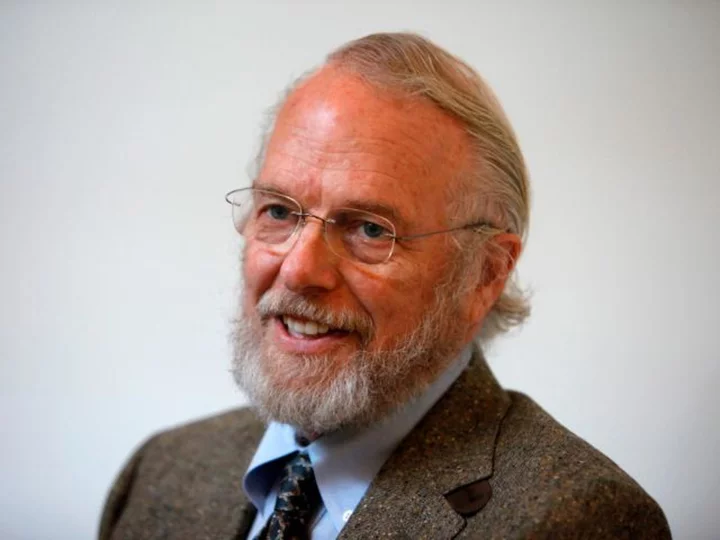
Adobe co-founder John Warnock, who helped invent the PDF, is dead at 82
John Warnock, co-founder of Adobe, has died aged 82, the software company announced on Sunday.
2023-08-21 20:52
Take Five: Doves versus hawks
LONDON It's a packed week ahead for markets with the European Central Bank holding a crunch meeting on
2023-09-08 15:47
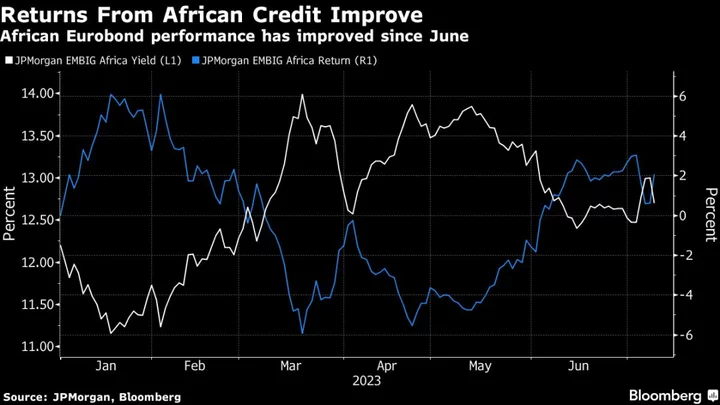
Window Opens for Frozen High-Yield Emerging-Market Dollar Deals
The waiting game for some of the riskier emerging-market borrowers is coming to an end. With higher interest
2023-07-16 21:25
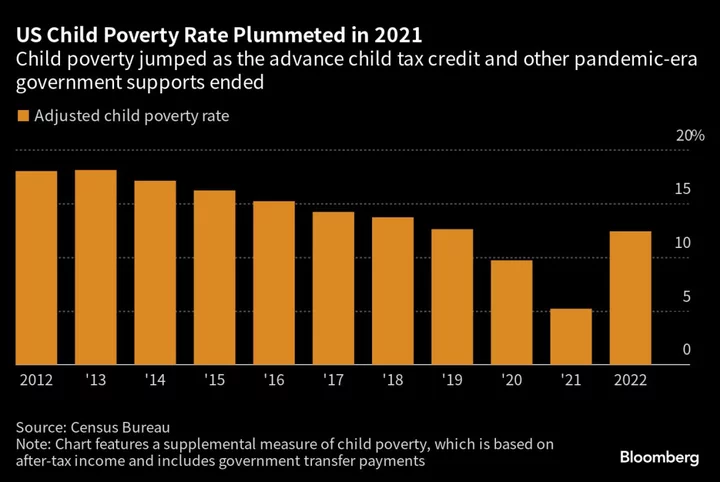
What GOP White House Contenders Would Do to Fix US Child Care
Amid the chaos of the latest Republican presidential debate, voters got a rare opportunity to hear how candidates
2023-10-08 21:50
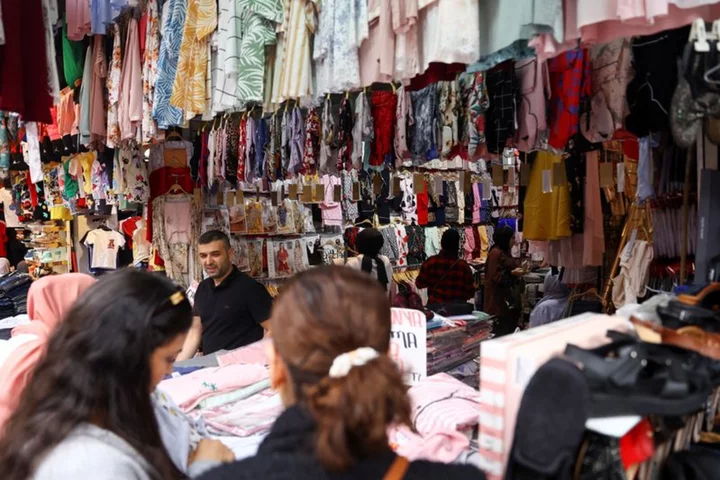
EBRD: Inflation has peaked, but rising gas prices will pressure households
By Jorgelina do Rosario LONDON Inflation has peaked in emerging Europe, central Asia and north Africa, but rising
2023-05-16 12:16
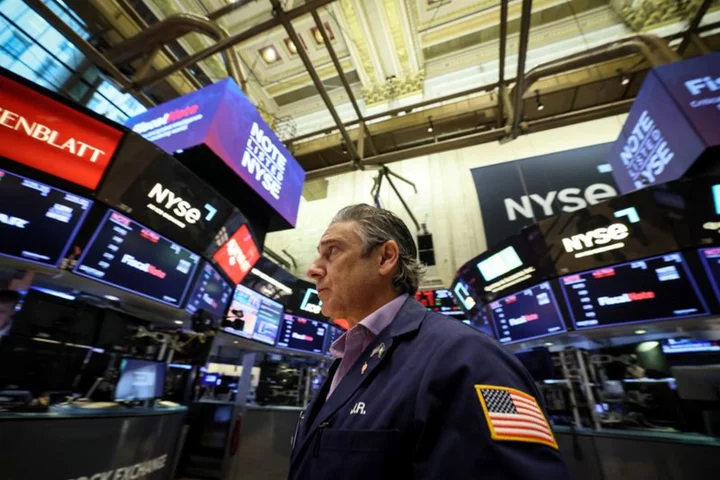
Futures fall on investor caution ahead of inflation data
U.S. stock index futures were muted on Friday ahead of a fresh inflation reading next week against the
2023-09-08 18:22

Birkenstock to target $8.6 bn IPO valuation: media reports
German sandals maker Birkenstock will launch on the New York stock exchange on Wednesday in an initial public offering that values the company at $8.6 billion...
2023-10-11 08:18
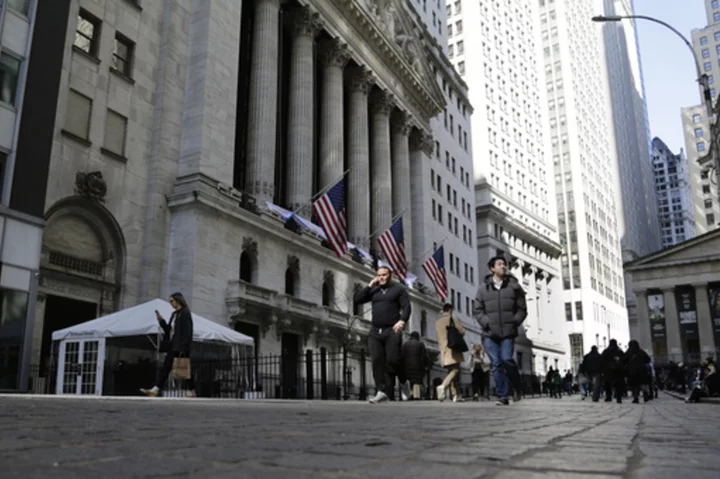
Stock market today: Wall Street ticks higher and adds to its big rally following profit reports
Stocks are ticking higher, adding to the strong run that has pulled Wall Street to its highest levels in more than 15 months
2023-07-19 23:55
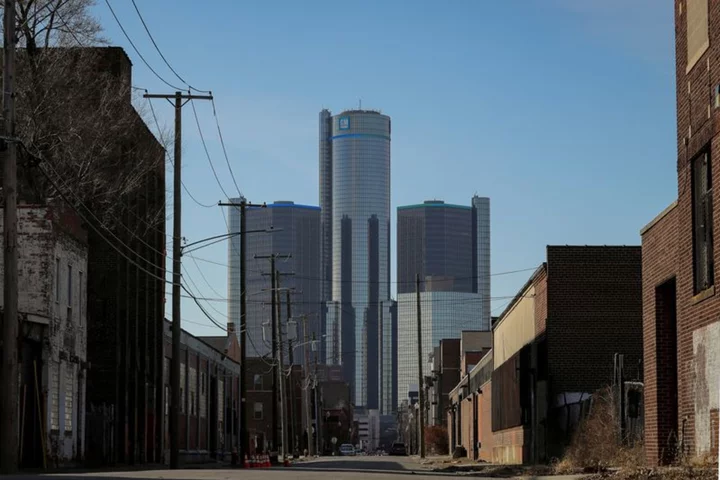
GM says it could face compliance challenges under new emissions rules
By David Shepardson WASHINGTON (Reuters) -General Motors said on Wednesday it could face compliance challenges under the Environmental Protection Agency's
2023-07-06 04:22
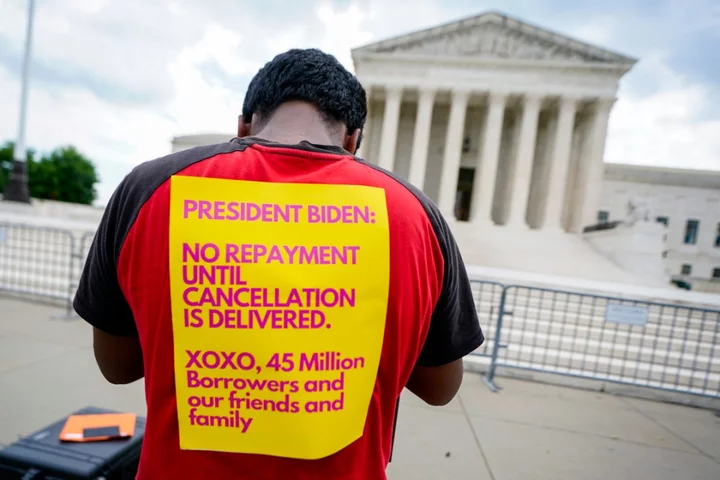
Supreme Court strikes down Biden’s plan to cancel student loan debts
The US Supreme Court has struck down President Joe Biden’s plan to cancel student loan debts for millions of Americans, reversing his campaign-trail promise as borrowers prepare to resume payments this summer. Chief Justice John Roberts delivered the 6-3 decision from the court’s conservative majority on 30 June. The ruling, which stems from a pair of cases challenging the Biden administration and the US Department of Education, argues that the president does not have the authority to implement sweeping relief, and that Congress never authorised the administration to do so. Within 30 minutes on the last day of its term, the court upended protections for LGBT+ people and blocked the president from a long-held promise to cancel student loan balances amid a ballooning debt crisis impacting millions of Americans. Under the plan unveiled last year, millions of people who took out federally backed student loans would be eligible for up to $20,000 in relief. Borrowers earning up to $125,000, or $250,000 for married couples, would be eligible for up to $10,000 of their federal student loans to be wiped out. Those borrowers would be eligible to receive up to $20,000 in relief if they received Pell grants. Roughly 43 million federal student loan borrowers would be eligible for that relief, including 20 million people who stand to have their debts canceled completely, according to the White House. Roughly 16 million already submitted their applications and received approval for debt cancellation last year, according to the Biden administration. The long-anticipated plan for debt cancellation was met almost immediately with litigation threats from conservative legal groups and Republican officials, arguing that the executive branch does not have authority to broadly cancel such debt. Six GOP-led states sued the Biden administration to stop the plan altogether, and a federal appeals court temporarily blocked any such relief as the legal challenges played out. Lawyers for the Biden administration contended that he has the authority to broadly cancel student loan debt under the Higher Education Relief Opportunities for Students Act of 2003, which allows the secretary of education to waive or modify loan provisions following a national emergency – in this case, Covid-19. Justice Roberts wrote that the law allows the secretary to “waive or modify” existing provisions for financial assistance, “not to rewrite that statute from the ground up.” The Supreme Court’s final decision of its 2022-2023 term also comes one day after another major education ruling, as the same conservative majority upended decades of precedent intended to promote racially diverse college campuses, what civil rights groups and the court’s liberal justices have derided as the court’s perversion of the 14th Amendment and the foundational concept of equal protection. Moments before its decision in the student debt plan, the Supreme Court decided a case involving a website designer who refused to cater to same-sex couples, but the case did not involve any such couple. Likewise, the case at the centre of the court’s decision on student loans involved an independent loan servicer in Missouri that did not want to be associated with the lawsuit. The six GOP-led states that led the challenge – Arkansas, Iowa, Kansas, Missouri, Nebraska, and South Carolina – opposed the Biden administration’s plan for a range of reasons that amount to “just general grievances; they do not show the particularized injury needed to bring suit,” Justice Elena Kagan wrote in her dissent. “And the States have no straightforward way of making that showing – of explaining how they are harmed by a plan that reduces individual borrowers’ federal student-loan debt,” she added. “So the States have thrown no fewer than four different theories of injury against the wall, hoping that a court anxious to get to the merits will say that one of them sticks.” She admonished a decision in which “the result here is that the Court substitutes itself for Congress and the Executive Branch in making national policy about student-loan forgiveness.” “The Court acts as though it is an arbiter of political and policy disputes, rather than of cases and controversies,” and by deciding the case, the court exceeds “the permissible boundaries of the judicial role,” Justice Kagan wrote. Since March 2020, with congressional passage of the Cares Act, monthly payments on student loan debt have been frozen with interest rates set at zero per cent. That Covid-19-pandemic era moratorium, first enacted under Donald Trump and extended several times, was paused a final time late last year – until the Education Department is allowed to cancel debts under the Biden plan, or until the litigation is resolved, but no later than 30 June. Payments would then resume 60 days later. The amount of debt taken out to support student loans for higher education costs has surged within the last decade, alongside growing tuition costs, increased private university enrollment, stagnant wages and GOP-led governments stripping investments in higher education and aid, putting the burden of college costs largely on students and their families. The crisis has exploded to a total balance of nearly $2 trillion, mostly wrapped up in federal loans. Millions of Americans also continue to tackle accrued interest without being able to chip away at their principal balances, even years after graduating, or have been forced to leave their colleges or universities without obtaining a degree at all while still facing loan repayments. Borrowers also have been trapped by predatory lending schemes with for-profit institutions and sky-high interest rates that have made it impossible for many borrowers to make any progress toward paying off their debt, with interest adding to balances that exceed the original loan. One analysis from the Education Department found that nearly 90 per cent of student loan relief would support people earning less than $75,000 per year. The median income of households with student loan balances is $76,400, while 7 per cent of borrowers are below the poverty line. That debt burden also falls disproportionately on Black borrowers and women. Black college graduates have an average of $52,000 in student loan debt and owe an average of $25,000 more than white graduates, according to the Education Data Initiative. Four years after graduating, Black student loan borrowers owe an average of 188 per cent more than white graduates. Women borrowers hold roughly two-thirds of all student loan debt, according to the American Association of University Women. Mr Biden’s announcement fulfilled a campaign-trail pledge to wipe out $10,000 in student loan debt per borrower if elected, though debt relief advocates and progressive lawmakers have urged him to cancel all debts and reject means-testing barriers in broad relief measures. In November 2020, the president called on Congress to “immediately” provide some relief for millions of borrowers saddled by growing debt. “[Student debt is] holding people up,” he said at the time. “They’re in real trouble. They’re having to make choices between paying their student loan and paying the rent.” ReNika Moore, director of the Racial Justice Program with the ACLU, among civil rights groups that filed briefs with the Supreme Court to defend the loan cancellation plan, said the “one-two punch” to end affirmative action and block debt relief will lock Americans out of economic oppurtunity and worsen wealth equality. “We urge the Biden administration and the Department of Education to move quickly to explore other pathways to ease the debt load on student loan borrowers once payments resume after a pandemic-related pause, including new executive action under the Higher Education Act, a law that allows for student loan relief for certain groups,” she added. Read More Supreme Court allows Colorado designer to deny LGBT+ customers in ruling on last day of Pride Month Biden condemns Supreme Court striking down affirmative action: ‘This is not a normal court’ Justice Ketanji Brown Jackson delivers searing civil rights lesson in dissent to affirmative action ruling The Supreme Court’s ruling on affirmative action is ugly and frustrating – but no surprise
2023-07-01 01:49

Krasdale Foods and PowerFlex Launch the Largest Solar System in the Bronx
BRONX, N.Y.--(BUSINESS WIRE)--Jun 14, 2023--
2023-06-14 19:27
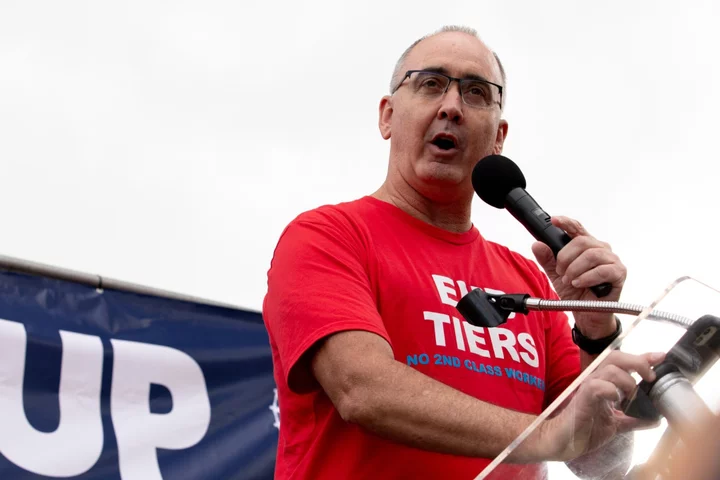
UAW Chief Fain Rejects 21% Pay Increase Offer as a ‘No-Go’
United Auto Workers President Shawn Fain said he’s unmoved by an offer of a 21% pay raise from
2023-09-18 02:22
You Might Like...
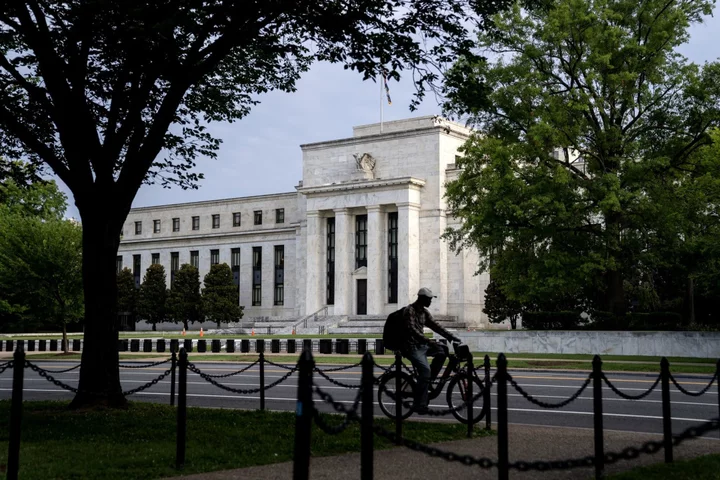
Traders Jack Up Fed Tightening Bets in Wake of Latest Jobs Data

Smartmatic implicated in alleged bribery scheme involving top Filipino election official
US FTC appoints Henry Liu to head Bureau of Competition
Trump Is Planning to Attend Opening of NY Fraud Trial Monday

Social media platform X to offer video, audio calls: Musk
U.S. Treasury bond ETFs draw net inflows this year despite recent market rout

First Quantum Starts Slowing Panama Mine as Port Blocked

UAW to expand strike at Ford and GM, Fain says